Airport counters · the April 2026 ID rule · when to bother
Japan SIM cards for tourists
The rules changed this year and almost nobody has updated their advice. A Japanese data SIM now wants your passport. A travel eSIM does not.
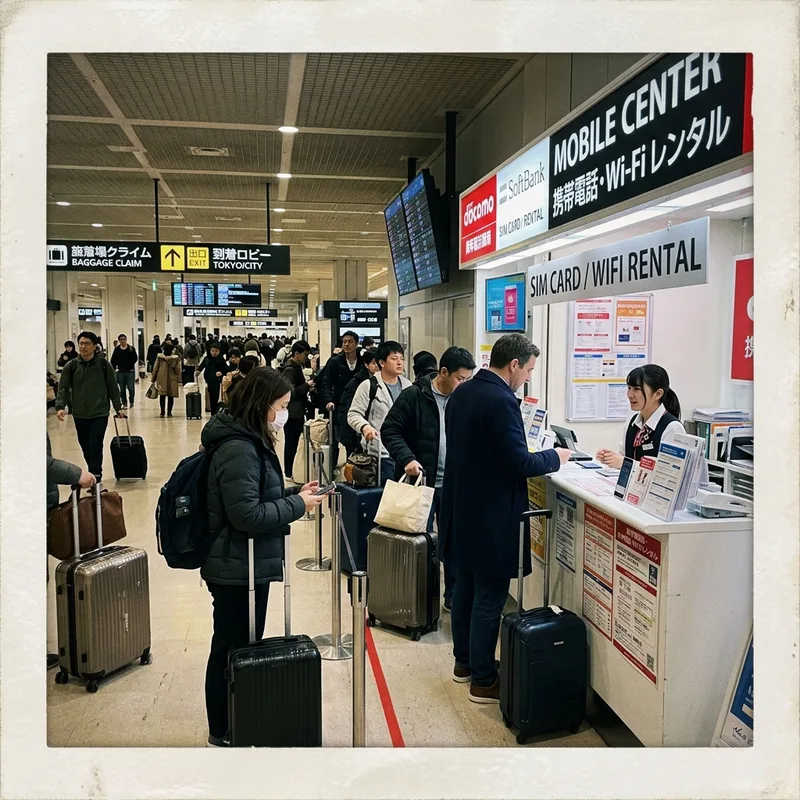
Japan changed the SIM rules in April 2026 and the old advice is now wrong
For a decade the standard advice about Japan was that it is the easy country. Thailand registers SIMs, China registers SIMs, Vietnam registers SIMs, and Japan let anyone walk up to a counter and buy a data SIM with no paperwork at all, because the registration law only covered voice lines. That is the sentence sitting in a hundred travel guides right now, and as of April it is out of date.
What actually changes for you is modest but real. You will hand over a passport at the counter and someone will record the details before the SIM works. It adds minutes rather than days, and there is no approval to wait for. But it is a step, it happens after a long-haul flight, and it is a step a travel eSIM does not have.
Voice SIMs remain harder. Buying a Japanese line with a phone number has long required proof of residence, which a tourist visa does not provide. The workarounds are a small number of operators who sell specifically to visitors. The phone number page covers those.
Where you can actually buy a Japanese SIM as a visitor three routes
| Route | Where | What to expect |
|---|---|---|
| Airport counter | Narita, Haneda, Kansai arrivals halls | SoftBank operates tourist SIM desks. Quick, staffed in English, and the most expensive way to buy data in Japan. Passport now required. |
| Ordered in advance | Delivered to your hotel or home | Mobal and similar visitor-focused sellers post a SIM to your accommodation or to you before you travel. Removes the queue, keeps the ID step. |
| Electronics shops | Bic Camera, Yodobashi, Don Quijote | Prepaid data SIMs on the shelf in the big city stores. Cheaper than the airport, and the staff will handle the ID check. Not every branch stocks them. |
| Carrier shops | Docomo, au, SoftBank branches | Not really a tourist route. They sell contracts, want residence documentation for voice lines, and the process is in Japanese. |
Convenience stores do not sell tourist SIMs in Japan, unlike much of Southeast Asia. Do not plan on a konbini as your fallback.
What a Japanese tourist SIM costs against the alternatives
| Option | Price | Notes |
|---|---|---|
| Airport tourist data SIM | ¥3,000–5,000 ($20–34) | 8 to 30 days depending on the pack. Passport scan since April 2026. |
| City electronics shop SIM | from ≈¥2,000 ($13) | Cheaper, but you have to be in a city with a Bic Camera before you need data. |
| GigSky eSIM 10GB / 30 days | $16.79 | On NTT Docomo. Installed at home, working when you land. |
| Airalo eSIM 5GB / 15 days | $10.50 | On KDDI. Enough for a ten-day city trip. |
| Pocket wifi, 7 days | ≈¥6,300 (≈$42) | Shared across five devices. Genuinely the right answer for a group. |
Yen converted at roughly ¥150 to the dollar. Airport SIM prices from 2026 counter listings at Narita and Kansai. eSIM prices checked September 4, 2026.
The counter is not a rip-off, it is a convenience product priced like one. What it costs you beyond the money is the twenty minutes at the end of a long flight, and now a passport check on top.
Physical SIM against travel eSIM the honest comparison
| Japanese SIM | Travel eSIM | |
|---|---|---|
| ID required | Yes, since April 2026 | No |
| Working when you land | No, buy on arrival | Yes, installed at home |
| Typical price, 10 days | $20–34 | $16.79 |
| Works on an old phone | Yes | Only with an EID |
| Keeps your home number active | No, it takes the slot | Yes, both lines run |
| Japanese phone number | Only on a voice SIM | No, data only |
| Network choice | Whatever the seller uses | Published by most brands |
| Small piece of plastic to lose | Yes, and your home SIM too | No |
The row that decides it for most people is the fifth one. A physical SIM takes the tray, so your home number goes in a pocket for two weeks and stops receiving the bank verification code you needed. An eSIM runs alongside the home line: data on the Japanese profile, calls and texts on your own number, roaming off.
When a physical SIM is still the right answer two cases
Dial *#06#. No EID means no eSIM, and no amount of reading changes that. Older handsets, most Japanese-market phones and some managed work devices are in this group. A physical SIM or a rented router are your two options.
Restaurant reservation systems, rental car desks, delivery lockers and some hotel check-ins want a domestic number and will not take a foreign one. No travel eSIM gives you one. That means a voice-capable line from a visitor-focused seller. The three routes are here.
If your phone takes an eSIM and you only need data, the eSIM is cheaper, arrives working, keeps your home number live and skips the passport check entirely. That is most visitors, most of the time. The comparison is here.
If your phone shows an EID when you dial *#06#, there is very little reason to plan an airport queue. GigSky is $16.79 for 10GB on Docomo and gives away 100MB first.
See GigSky Japan plans Compare every eSIMJapan SIM card questions short answers
Do I need a passport to buy a SIM card in Japan?
Yes, since 1 April 2026. The Mobile Phone Improper Use Prevention Act was amended to extend identity verification to data-only SIMs and eSIMs, which were previously exempt. A passport or residence card is checked and recorded before the line activates. A travel eSIM bought before you fly is a foreign roaming contract and is not affected.
Can foreigners buy a SIM card in Japan?
Yes for data SIMs, with a passport since April 2026. Voice SIMs with a Japanese phone number are harder: they have long required proof of residence, which a tourist visa does not give you, so the practical route is a visitor-focused seller like Mobal rather than a carrier shop.
Which SIM card is best in Japan for tourists?
For most visitors the honest answer is not a SIM card at all: a travel eSIM is cheaper, works the moment you land and keeps your home number active. If you need a physical SIM, the airport counters at Narita, Haneda and Kansai are the fastest route and the most expensive, and a Bic Camera or Yodobashi in the city is cheaper.
How much is a SIM card in Japan?
Roughly ¥3,000 to ¥5,000, about $20 to $34, for a tourist data pack of 8 to 30 days at an airport counter, and from about ¥2,000 in a city electronics store. A 10GB travel eSIM is $16.79 and does not involve a queue. Checked September 4, 2026.
Can I buy a SIM card at the airport in Japan?
Yes. SoftBank runs tourist SIM counters in the arrivals halls at Narita, Haneda and Kansai. Bring your passport, since the April 2026 rule change made identity verification mandatory for data SIMs as well as voice ones. Convenience stores do not sell them, so the counter or a city electronics shop are the two options.
No queue, no passport scan, $16.79
Ten gigabytes over thirty days on NTT Docomo, installed on your phone at home and working the moment the plane doors open. Your home number stays live alongside it. If your phone cannot take an eSIM, the counter routes above are the ones to use.
See GigSky Japan plansSources & freshness: The 1 April 2026 identity-verification change is the amended Mobile Phone Improper Use Prevention Act (携帯電話不正利用防止法), reported in Japanese industry and eKYC compliance coverage and in English-language visitor guidance, checked September 4, 2026. Airport counter prices from 2026 listings at Narita and Kansai, converted at roughly ¥150 to the dollar. eSIM prices from esimdb and each brand's Japan page on September 4, 2026. How we test.